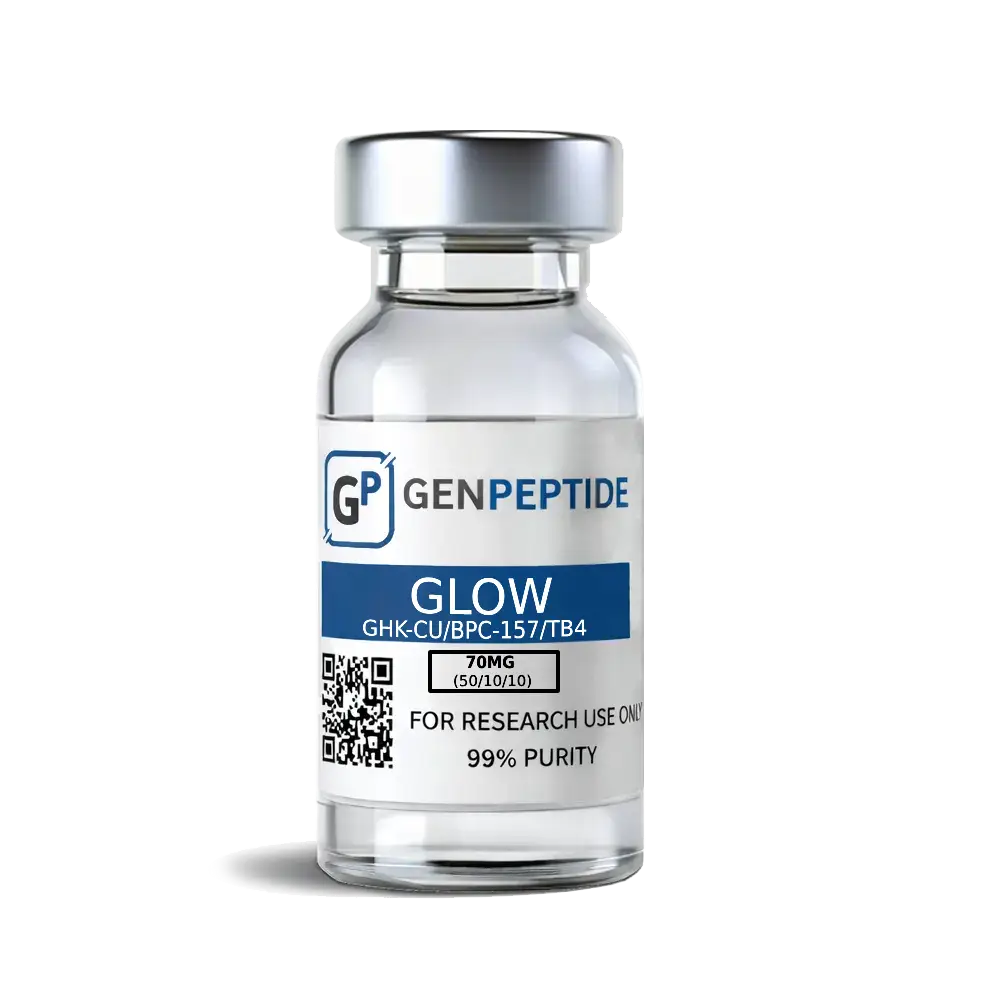
GLOW GHK-CU/BPC-157/TB4 Research Overview | GenPeptideLabs
Understanding Regenerative Peptide Research in Modern Science
Regenerative biology and peptide-based research have become rapidly expanding fields in molecular science. Among the most widely studied compounds in laboratory environments are GHK-Cu (Copper Tripeptide-1), BPC-157, and Thymosin Beta-4 (TB-500 fragment).
These peptides are frequently examined in preclinical and in-vitro research models for their roles in cellular repair signaling, tissue regeneration pathways, and biological response mechanisms. At ch.com, we provide research-use-only materials designed strictly for scientific investigation.
Important Notice: All compounds referenced are strictly for laboratory research purposes only and are not intended for human or veterinary use.
What is GHK-Cu (Copper Tripeptide-1)?
GHK-Cu is a naturally occurring copper-binding tripeptide composed of glycine, histidine, and lysine. It is found in human plasma and is widely studied in skin biology and regenerative research.
Research Areas Include:
- Fibroblast activation and collagen synthesis pathways
- Skin tissue remodeling and extracellular matrix regulation
- Anti-inflammatory signaling mechanisms
- Wound healing gene expression models
- Copper-dependent enzymatic activity in cells
GHK-Cu is considered a key molecule in dermatological and aging-related research due to its role in cellular repair signaling.
What is GLOW GHK-CU/BPC-157/TB4
BPC-157 is a synthetic peptide fragment derived from a protective gastric protein sequence. In laboratory studies, it is frequently analyzed for its interaction with angiogenesis and tissue repair mechanisms.
Key Research Focus Areas:
- Blood vessel formation (angiogenesis) pathways
- Tendon and ligament cellular repair models
- Gut epithelial barrier function research
- Inflammatory response modulation in tissues
- Cytoprotective signaling mechanisms
GLOW GHK-CU/BPC-157/TB4 is widely used in preclinical biological research models exploring tissue regeneration and cellular resilience.
What is Thymosin Beta-4 (TB-500)?
GLOW GHK-CU/BPC-157/TB4 is a synthetic fragment of Thymosin Beta-4, a naturally occurring protein involved in actin regulation and cell migration.
Research Applications Include:
- Cellular movement and tissue repair mechanisms
- Angiogenesis and vascular development studies
- Cytoskeletal organization and structure research
- Wound healing response modeling
- Inflammatory signaling regulation
GLOW GHK-CU/BPC-157/TB4 is commonly studied in cell biology and regenerative medicine research environments.
Why Researchers Study the GLOW GHK-CU/BPC-157/TB4 Combination
In experimental biology discussions, these compounds are sometimes evaluated together due to overlapping roles in cellular repair and regenerative signaling pathways.
1. Tissue Regeneration Pathways
Each peptide is associated with different aspects of tissue repair, including extracellular matrix formation, vascular response, and cellular migration.
2. Angiogenesis Research Models
GLOW GHK-CU/BPC-157/TB4 are often studied in vascular growth research, while GHK-Cu contributes to extracellular signaling regulation.
3. Cellular Communication Systems
Researchers analyze how peptides influence intracellular signaling cascades involved in inflammation and recovery responses.
4. Regenerative Biology Exploration
Together, these compounds are frequently referenced in broader studies of tissue remodeling and cellular repair mechanisms.
Scientific Importance of These Peptides
The significance of these peptides lies not in consumer application, but in their value for understanding biological systems at the molecular level.
Researchers use them to study:
- Gene expression regulation
- Protein synthesis and signaling pathways
- Cellular repair mechanisms
- Oxidative stress responses
- Tissue regeneration modeling
These insights contribute to ongoing advancements in biochemistry, molecular biology, and regenerative science.
GenPeptideLabs Research Standards
At GenPeptideLabs.com, we support scientific research by providing high-quality laboratory materials designed for controlled experimental use.
We emphasize:
- High-purity peptide synthesis
- Batch consistency for reproducible research
- Strict laboratory testing protocols
- Transparent labeling for research use only
- Reliable USA-based fulfillment
Our mission is to support scientific advancement through dependable research compounds.
Responsible Research Use
All materials provided are strictly intended for in-vitro and laboratory research settings only. They are not intended for human consumption, medical use, or therapeutic application.
Proper handling and compliance with institutional research guidelines are required at all times.
SEO Strategy Insight (Important for Ranking)
To rank effectively in Google USA search results, pages like this should:
- Focus on educational and scientific authority content
- Use “research,” “mechanism,” “pathways,” and “laboratory study” language
- Avoid direct transactional phrasing for sensitive compounds
- Build topical authority clusters instead of single sales pages
This approach improves long-term ranking stability and trust signals.
Final Summary
GLOW GHK-CU/BPC-157/TB4 are widely studied peptides in modern regenerative and molecular biology research. Their combined interest in scientific literature reflects ongoing exploration into cellular repair, tissue regeneration, and biological signaling systems.
At GenPeptideLabs, we remain committed to supporting research professionals with high-quality, laboratory-grade materials designed for controlled scientific environments.
Reviews
There are no reviews yet.