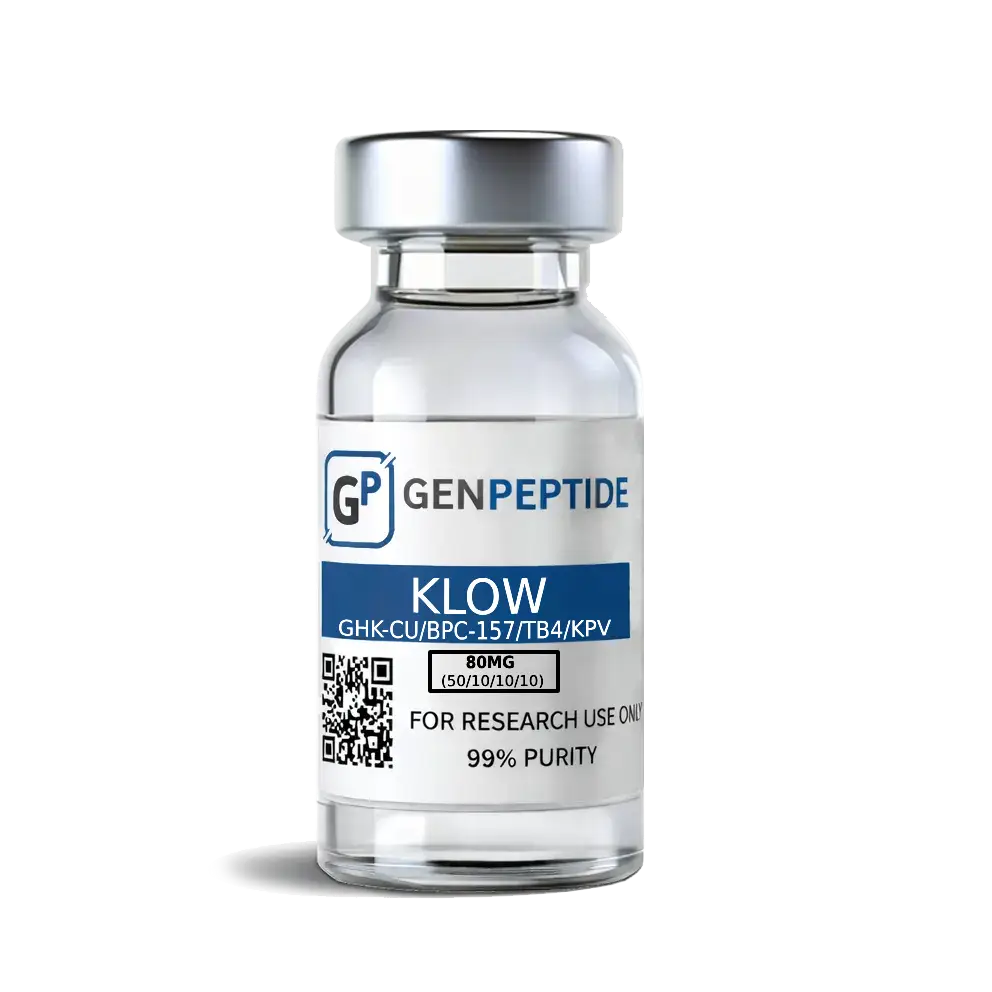
KLOW GHK-CU/BPC-157/TB4/KPV Research Overview | GenPeptideLabs
Understanding Multi-Peptide Research in Regenerative Biology
In modern laboratory science, researchers often study combinations of bioactive peptides involved in cell signaling, inflammation modulation, tissue repair pathways, and regenerative biology mechanisms. Among the most frequently discussed compounds in this category are GHK-Cu (Copper Tripeptide-1), BPC-157, Thymosin Beta-4 (TB-500 fragment), and KPV (Lysine-Proline-Valine peptide fragment).
At GenPeptideLabs.com, all materials are provided strictly for in-vitro and preclinical research use only and are not intended for human or veterinary application.
Important Notice: All compounds are strictly for laboratory research purposes only.
What is KLOW GHK-CU/BPC-157/TB4/KPV?
KLOW GHK-CU/BPC-157/TB4/KPV is a naturally occurring copper-binding tripeptide widely studied in dermatology and cellular biology research.
Research Focus Areas:
- Collagen synthesis and extracellular matrix regulation
- Skin fibroblast signaling pathways
- Wound healing gene expression models
- Anti-inflammatory response mechanisms
- Cellular regeneration signaling
GHK-Cu is widely used in skin biology and regenerative research models.
What is KLOW GHK-CU/BPC-157/TB4/KPV?
KLOW GHK-CU/BPC-157/TB4/KPVis a synthetic peptide fragment derived from a gastric protective protein sequence studied in preclinical environments.
Key Research Areas:
- Angiogenesis (blood vessel formation) pathways
- Tissue repair and regeneration models
- Gut epithelial barrier function research
- Inflammatory response modulation
- Cytoprotective signaling mechanisms
It is primarily used in preclinical biological and tissue repair research.
What is Thymosin Beta-4 (TB-500)?
TB-4 is a naturally occurring protein fragment involved in actin regulation and cellular movement.
Research Applications:
- Cell migration and tissue repair signaling
- Angiogenesis and vascular development studies
- Wound healing response modeling
- Cytoskeletal organization research
- Inflammatory regulation pathways
TB-4 is widely studied in cell biology and regenerative medicine research.
What is KLOW GHK-CU/BPC-157/TB4/KPV Peptide?
KPV is a tripeptide fragment (Lysine–Proline–Valine) derived from alpha-MSH and is studied for its anti-inflammatory signaling effects.
Research Focus Areas:
- Inflammatory response regulation
- Immune signaling pathway modulation
- Gut inflammation research models
- Cytokine interaction studies
- Cellular stress response mechanisms
KPV is primarily used in immunology and inflammation research environments.
Why Researchers Study Multi-Peptide Combinations
In laboratory research, combinations of peptides such as GHK-Cu, BPC-157, TB-4, and KPV are studied for overlapping biological functions.
1. Tissue Repair Mechanisms
Each peptide interacts with different aspects of cellular repair, including extracellular matrix formation and cell migration.
2. Inflammation Pathway Research
KPV and BPC-157 are often studied in inflammatory signaling models, while GHK-Cu and TB-4 contribute to tissue response analysis.
3. Cellular Communication Studies
Researchers investigate how peptides influence intracellular signaling cascades.
4. Regenerative Biology Models
These compounds are frequently referenced in broader studies of tissue remodeling and repair systems.
Scientific Importance (Research Context Only)
These peptides are not approved therapies. Their value lies in understanding biological and molecular mechanisms, including:
- Gene expression regulation
- Protein signaling pathways
- Immune response modulation
- Cellular regeneration processes
- Tissue repair modeling
All work is conducted under strict laboratory research conditions.
GenPeptideLabs Research Commitment
At GenPeptideLabs.com, we support scientific research by providing:
- High-purity research compounds
- Batch-tested laboratory materials
- Strict “research use only” labeling
- Transparent quality control standards
- Reliable USA-based fulfillment
We focus on supporting biomedical and biochemical research advancement.
Reviews
There are no reviews yet.